What is homeopathy?
Homeopathy is a natural, alternative form of energetic medicine that has been around for over 200 years; since the late 18th Century. It was developed by Samuel Hahnemann, a German Physician and is based on the principle of ‘like cures like’. It views physical symptoms as potential signals from the body, sometimes reflecting deeper emotional or psychological imbalances that may need attention. Through personalised consultations and carefully selected remedies, homeopathy aims to explore the underlying causes of symptoms and support overall mental, emotional and physical wellbeing.
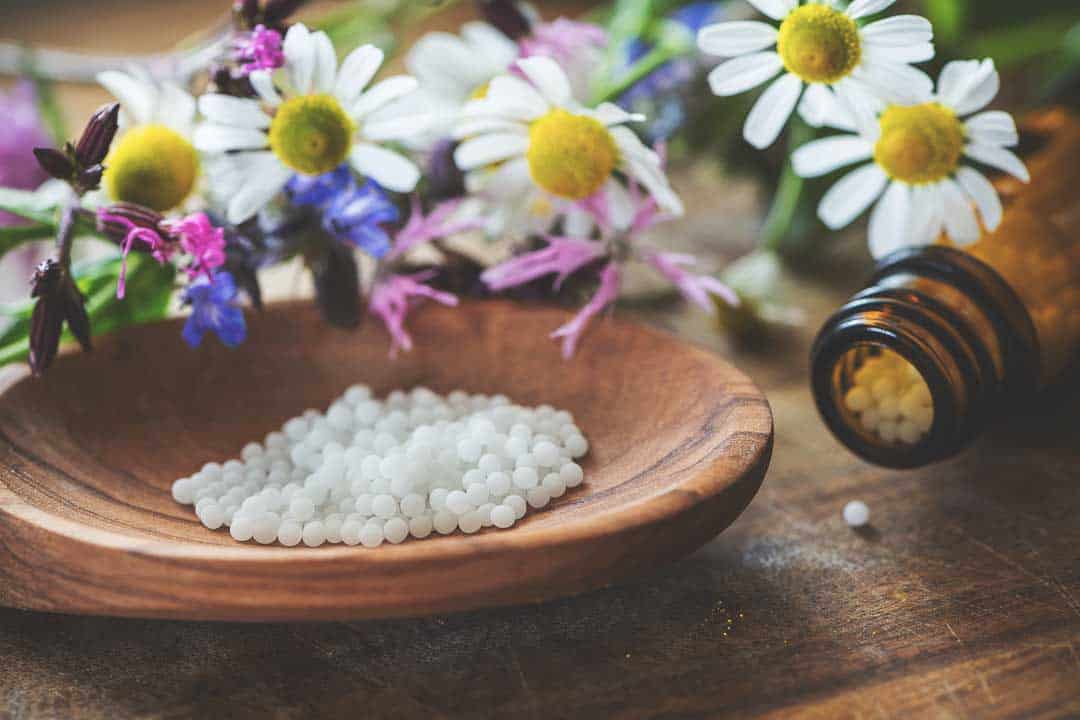
Homeopathic remedies can be made from a range of sources such as plants, minerals and chemical compounds, animal products etc. They are prepared through a process of vigorous shaking (succussion) the source with water/alcohol, resulting in dilution. They are available in different potencies depending on the person and their needs. This process is central to the energetic approach of homeopathy. This liquid is then available as liquid form with a pipette, or most commonly, dropped onto sugar-based pillules.
What does ‘like cures like’ actually mean?
It is the principle that a substance capable of producing certain symptoms in a healthy person can, when prepared as a homeopathic remedy, be used to treat similar symptoms in someone who is experiencing them. For example, if a substance causes symptoms such as watery eyes and a runny nose in a healthy person, a Homeopath might select that substance as a remedy for someone experiencing similar symptoms.
The idea is that through the homeopathic process of dilution and succussion, the substance is prepared to help the symptom; it is not the Homeopath giving someone more of the thing causing the problem.
Individualised approach
In practice, we often talk about homeopathy as an individualised approach, meaning that the remedies prescribed are not a ‘one size fits all’ solution. Two people may come to me with the same complaint, such as chronic headaches, but that does not necessarily mean they would receive the same remedy.
During a consultation, I take the time to understand each person as an individual, exploring their experiences, emotional wellbeing and medical history, as well as significant events or challenges they may have experienced throughout their life. These factors can help build a picture of the person as they are today and may provide insight into what could be contributing to their symptoms.
So, while two clients may both experience chronic headaches, their individual histories and experiences may be very different. From a homeopathic perspective, this means they may require different remedies tailored to their individual picture, rather than simply receiving the same remedy because they share the same symptom.
Is homeopathy the same as herbal medicine?
To put it simply, no, homeopathy and herbal medicine are not the same thing. Yes, they both use plants, however herbal medicine is more focused on the property of the plant, whereas in homeopathy, due to the succussion and dilution process, in a case of using a high potency, there could be very little of the original substance within the remedy, compared to herbal medicine that usually retains active compounds. Herbal medicine usually comes in forms of teas, tinctures, extracts, capsules, creams etc., whereas homeopathic remedies usually come as pillules, liquid or creams.
Can homeopathy be used alongside conventional medicine?
Yes, homeopathy can be used alongside conventional medication and other forms of treatment. Some people choose to incorporate homeopathy into their wider approach to wellbeing because they prefer to explore complementary and natural options alongside conventional care where appropriate.
I also like to encourage people to consider simple, natural approaches where suitable, rather than automatically reaching for medication for every minor ailment. For example, when experiencing a common cold, someone might choose to try make a honey, lemon and fresh ginger tea, along with Echinacea, rather than immediately reaching for Lemsip.
As homeopaths, we do not diagnose medical conditions. If someone comes to me seeking a diagnosis, I would encourage them to speak with their GP or another appropriately qualified healthcare professional. Similarly, if someone presents with a serious or concerning health issue and hasn’t yet sought medical advice, I would recommend that they consult their GP first. Once they’ve received appropriate medical guidance, we can then discuss how we can work together.
The aim is to support people in making informed choices about their wellbeing while recognising when medical care is needed, as well as how a natural approach could be more suitable.
Homeopathic hospitals
Not many people know there used to be homeopathic hospitals established through the NHS in 1948. The dedicated homeopathic hospitals were in places such as London, Liverpool, Glasgow, Bristol, and Tunbridge Wells. From the 1970s onwards, these hospitals gradually started closing or integrating with allopathic medicine due to funding.
Sadly, the UK seems to be more ‘shut down’ to homeopathy compared to countries such as India, Germany, France, Switzerland, Austria, South America, South Africa, and more, where they are a lot more culturally accepting of it. I believe the awareness of homeopathy in the UK is increasing. I think it is important to note that homeopathy is safe and gentle, meaning there’s no side effects but you will need patience; it is not a ‘quick fix’.
Celebrities and homeopathy
Some examples of celebrities that use homeopathy are: [1]
- Paul McCartney: claims he takes homeopathic remedies with him everywhere he goes
- Charlotte Tilbury [2]: she is the global ambassador for ‘homeopathy UK’
- Jamie Laing [3]: expressed multiple times how homeopathy has helped with his anxiety, as well as his wife, Sophie Habboo who used it throughout her pregnancy
- Hannah Waddingham [4]: opened up about using homeopathy to help her get pregnant after she found out she had low fertility rates
- Stacey Dooley: she found homeopathy has helped her with her fear of flying
- Tina Turner: claims homeopathy ‘saved her’
- Pamela Anderson: believes homeopathy ‘keeps her strong’
- The Royals such as our late Queen Elizabeth and Prince Charles, have always been open about how much they use and support homeopathy
The list goes on…
What happens if I decide I’d like to try homeopathy?
If you’d like to try the magic of homeopathy, then you can start by booking a free discovery call with myself and we can go from there…
Read: What happens during a homeopathy consultation?
References:
[1] North West College of Homeopathy
[2] Charlotte Tilbury Instagram Reel
[3] Jamie Laing Instagram Reel 1 | Jamie Laing Instragram Reel 2
[4] Hannah Waddingham Instagram Reel